


What Is Art, and Why
Every book that makes a strong claim owes its reader an honest starting point. Mine is this: art is consciousness manifested. Not a beautiful photograph or painting. Not a technically accomplished one. Art, in the sense I mean it, is what happens when something real and internal — something only you have uniquely access to — finds its way into a form other people can encounter.
That's a bold claim to open a book with, and it deserves more than a slogan. So the introduction to The Sound and the Shape of Light spends its time doing something most photography books skip entirely: it asks what consciousness actually is, why it's stranger than it looks, and why that strangeness matters to anyone holding a camera. Or a brush.
Part OneThe One Thing We Can't Doubt
Start with a simple observation, one philosophers have discussed for centuries: whatever else you might be wrong about — the nature of the room you're sitting in, the reliability of your senses, the existence of the outside world as you picture it — there's one thing you cannot be wrong about. You are experiencing something, right now. That raw fact of subjective experience is the one piece of the universe given to you directly, without inference.
Philosopher Thomas Nagel put this in a famous, deceptively simple way: there is something it is like to be a bat, navigating the world through echolocation — some inner quality to that experience — and no amount of external description of bat neurology will ever hand you that quality from the outside. You can map every neuron and still not know what it's like to be the bat having the experience. That gap between the objective extrinsic description of a system and the subjective intrinsic feel of being it, is what philosophers now call the hard problem of consciousness — a term coined by David Chalmers in the mid-1990s, and one that remains genuinely unresolved, argued over by serious thinkers on every side.
This isn't a fringe puzzle. This isn't an irrelevant and obscure problem. It sits at the center of a live disagreement among people who study the mind for a living — some confident consciousness will eventually be explained in ordinary physical terms, others convinced it points at something physical description can never fully capture. I don't pretend this book settles that argument. But I do think the argument itself — the fact that it's this hard, and this unresolved — matters enormously for how we think about art.
Part TwoA Longer Lineage Than It Looks
None of this starts with modern neuroscience. The introduction traces a line back through Arthur Schopenhauer, who argued that the world as we know it is always the world as represented to a perceiving mind — that what lies beneath appearance is something we approach only through our own inner will and experience, never directly. It's a lineage that runs forward too, through Carl Jung's collaboration with physicist Wolfgang Pauli, two very different thinkers from two very different fields who spent years correspondence-deep in the question of whether mind and matter might be more entangled than either discipline assumed on its own.
I find that lineage clarifying rather than decisive. It doesn't prove metaphysical idealism true. What it does is establish that taking consciousness seriously as a starting point — rather than an afterthought to be explained away — is a long-standing, intellectually serious position, not a New Age detour.
Part ThreeWhy This Matters Right Now
There's a cultural backdrop to all of this that I think is worth naming honestly. We're living through what philosopher John Vervaeke has called a "meaning crisis" — a widespread sense of disconnection and flatness that shows up even in societies that are, by every material measure, wealthier and more comfortable than at any point in history. I find that pattern genuinely troubling, and worth sitting with.
Where I want to be careful — and where I've been pushed to be more careful in early feedback on this chapter — is in how that observation gets used. That metaphysical materialism, taken as a total worldview, seems to leave a lot of people feeling flat and disconnected is a real and interesting cultural claim. It is not, on its own, an argument that materialism is false. Those are two different questions, and the introduction is being reworked to keep them clearly separated rather than letting one quietly stand in for the other. The psychological cost of a worldview and the truth of that worldview are not the same thing, and a book that wants to be taken seriously has to hold that line.
What I can say with more confidence is this: whatever the final metaphysical verdict, treating consciousness as real, as primary, as worth taking seriously on its own terms rather than reducing away — that orientation changes what you think art is for. If your inner life is a footnote to chemistry, then a photograph is a footnote too. If it's not, then the photograph is closer to the center of things than we usually give it credit for.
Where This Leaves UsArt as the Bridge
Here's where the introduction lands, and where the rest of the book takes its first steps from: if consciousness is the one thing each of us knows directly and privately, then art is one of the only bridges across that privacy. A photograph, made honestly, is an attempt to hand someone else a piece of an experience they could never have had directly. Not a copy of the world. A trace of a particular consciousness moving through it.
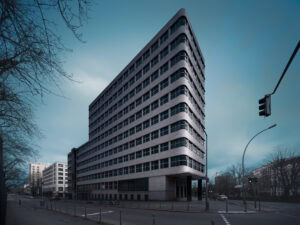
That's the claim the rest of this book has to earn, chapter by chapter — first in the general principles of fine art photography, and then in the very specific, very concrete decisions that come with photographing architecture. The philosophy doesn't stay abstract for long. It has to show up at the moment we start creating, with a camera, a brush, or a typewriter.
What's here is the short version. The book will go further — tracing this thread from the philosophy of consciousness all the way to the end result on print, showing exactly how an idea like this changes the decisions you make behind the camera.
If you'd rather explore where philosophy and practice actually meet, in person, that's exactly what the Netherlands–Belgium Fine Art Architecture Premium Workshop is for. Over four days in Amsterdam, Rotterdam, and Antwerp (November 5–8, 2026), we'll put this worldview to work in the field — not as abstraction, but as the lens through which every composition decision gets made.An early bird discount applies until August 14, 2026.


2 Responses
The article treats subjective experience as directly known while distinguishing it from third-person description.
New Argument from Consciousness
This video explores the meta problem of consciousness proposed by David Chalmers and argues that naturalistic processes couldn’t have given us knowledge of consciousness
This is my video: https://www.youtube.com/watch?v=WJVvZNi0Fi8
Drafted with AI assistance.
Nice video about the mystery of consciousness. There are things in your video I find contradictory but what’s most problematic for me is that you state that subjective experience is the result of neurons firing. That’s a physicalist argument that has never been proven. As Donald Hoffman, among other idealist thinkers have said: there’s no single subjective experience or quale that can be explained by neurons firing (physical, mechanistic brain activity). There’s a correlation but no causation. I’m an idealist and the idea that consciousness is fundamental and cannot emerge from matter will always be my starting point in everything in life. Including in art.
Joel