
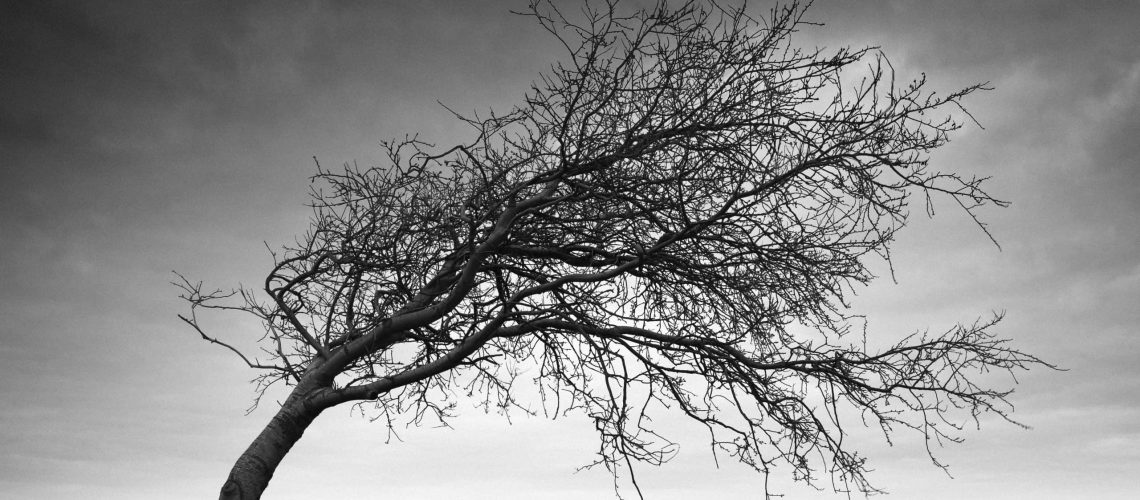

How Do You Photograph a Feeling?
There's a question that sits underneath everything discussed so far in this book. If art is consciousness manifested — if it's the authentic expression of something private and subjective — how does that private thing ever actually reach another person? You can't hand someone your inner experience directly. So what do you hand them instead?
The answer this chapter works through is: a symbol. An object, a color, a shape, a gesture of light — something concrete enough to photograph, but used as a carrier for something that isn't concrete at all. Tolstoy said it nearly 150 years ago: art is the act of evoking a feeling in yourself, and then finding a way — through form, color, sound, or line — to transmit that same feeling into someone else. That's what this chapter is really about.
Part OneSubject Matter vs. Object Matter
The chapter opens with a distinction that, once you see it, is hard to unsee: the difference between subject matter and object matter.
Object matter is simply the thing in the photograph — the building, the cloud, the animal. Subject matter is the actual message: the feeling, the idea, the inner experience the artist is trying to express. In most of what we casually call photography, these two collapse into one — a product shot of a phone is about the phone. But in fine art, they routinely come apart. The object in the frame becomes a symbol standing in for something else entirely.
The same split shows up, more dramatically, in work that has no recognizable object at all. Abstract painters working in pure color and form — Rothko among them — have no "thing" you could point to and call the subject. And yet Rothko himself insisted his fields of color were about something as concrete as tragedy and ecstasy, real enough that people wept in front of his paintings. There's no object matter there whatsoever. Only subject matter — proof that the two were never the same thing to begin with.
Part TwoWhen a Photograph Says Two Things at Once
Sometimes object matter and subject matter aren't in tension — they're doing double duty. The chapter points to some of the most recognizable news photographs ever taken: an unnamed man standing alone in front of a line of tanks on Tiananmen Square, or Robert Capa's photograph of a soldier captured at the exact moment of falling in battle. These images are entirely literal — informative, documentary, exactly what they appear to be. And at the very same time, they've become something larger: symbols of defiance, of mortality, of the cost of conflict, recognized far beyond the specific event they recorded.
That's a useful reminder that symbol-making isn't only the province of deliberately abstract, arty work. Sometimes the object matter and the deeper subject matter are exactly the same image — it just depends on how much weight that image ends up carrying over time.
Part ThreeWhere Symbols Actually Come From
If symbols are the vehicle for meaning, the next question is unavoidable: which symbols, and how do you choose them? Some are close to universal and instantly legible — a dove for peace, a particular cross for faith, red for passion. Fine art history has its own well-worn vocabulary too, especially from still-life painting: a skull for mortality, a rose for love, a lily for purity.
None of that is wrong to use. It's also, admittedly, not always where the most original work lives — and this traditional still-life vocabulary (skulls, flowers, fruit) doesn't transfer cleanly to a photograph of a building. But that's not actually a gap in the theory. It's the theory working exactly as intended.
Here's why: a skull means mortality regardless of how well or badly it's painted. That's what makes it a fixed symbol — a shared dictionary, inherited from art history, where the object itself carries the meaning. But that's precisely the kind of symbolism Stieglitz's clouds were never doing. Clouds don't mean "the infinite self" by default; most photographs of clouds mean nothing more than a nice sky.
So where does the meaning actually come from, if not from the object? Not from the treatment alone, either — that would still leave meaning as something arbitrary, floating free of any author. The more precise answer is this: meaning originates in the artist's subjective intention. That intention is private by nature — inaccessible to any viewer directly, the same way one person's consciousness is never directly accessible to another. Treatment is what makes that private intention externally recognizable at all. And treatment achieves this because it draws on formal elements that already carry a kind of near-universal expressive charge: harsh contrast reads as tension or conflict; subtle tonal transitions read as calm; storm-dark skies read as ominous; negative space reads as tranquility. None of that is arbitrary convention the way a skull-for-mortality dictionary is — it's closer to how human perception and emotion actually respond to form, light, space, and last but not least, shape.
What turns that raw expressive charge into a specific, personal symbol is the artist's intention and context sharpening it into something particular. Stieglitz's isolation of his clouds from any horizon or landmark, sequenced with a deliberate tonality, is what turned "clouds" into "the infinite self" rather than leaving them as a moody sky. The formal treatment supplied the charge. His intention decided what, specifically, that charge stood for.
The same logic applies directly to architecture. A building can't carry a fixed, general symbolic meaning the way a skull or a lily can — a cathedral doesn't automatically "mean" transcendence any more than a cloud automatically means the infinite self. But an architectural photographer's intention, made visible and amplified through contrast, light and shadow, the sense of movement or stillness, the presence or absence of traffic and people, the specific shape of a building and the tension between mass and void — that treatment carries genuine symbolic potential. Not a dictionary of "this building type means that," but a toolkit: the formal levers through which a photographer's private, subjective intention becomes something an observer can actually encounter, and interpret, as a personal, symbolic visual language.
Where this chapter goes deeper is into a less obvious source: the work of Carl Jung, and his idea of archetypes — recurring symbolic patterns (the sage, the mother, the shadow) that Jung believed show up across cultures and across history, independent of whether any two people describing them ever had contact with each other. Jung leaned heavily on dreams as the language through which these deeper patterns surface, since — in his account — the unconscious doesn't communicate in ordinary words, only in image and symbol.
The practical takeaway, though, doesn't depend on resolving that debate. Whether or not archetypes are literally universal in Jung's strong sense, thinking in archetypal terms is a genuinely useful creative habit: identify the emotion or experience you actually want to express, then go looking — deliberately, rather than by default — for the symbol, shape, or archetype that carries it, rather than reaching for the first cliché at hand.
Where This Leaves UsThe Necessary Detour
Symbols exist because direct transmission of subjective experience is impossible. You can never fully know what another person's consciousness feels like from the inside — and you can never perfectly hand someone else yours, either. A symbol is the workaround: an imperfect but real bridge across that gap. Its meaning will never land the same way twice, in the same way that no two people ever experience an artwork identically. That's not a flaw in the method. According to this chapter, it's the entire reason art can be personal for the artist and still meaningful, in its own way, to a total stranger.
What's here is the short version. The book will go further — tracing how symbol and archetype apply specifically to architectural photography, with the case studies and image references to back it up.
If you'd rather work through this in person, with a camera in hand and buildings in front of you, that's exactly what the Netherlands–Belgium Fine Art Architecture Premium Workshop is for. Over four days in Amsterdam, Rotterdam, and Antwerp (November 5–8, 2026), we'll put these ideas into practice on location — including how treatment, not the building itself, becomes the carrier of personal, symbolic meaning. Early Bird discount with 150 off applies until August 14, 2026.


2 Responses
Hello Joel,
I am enjoying very much your chapter summaries and I can’t wait for your book to become available.
I have an editorial suggestion on this article. I think that the statement: “Rothko among them — have no “thing” you could point to and call the subject” should actually read: Rothko among them — have no “thing” you could point to and call the object.
Kind regards,
Jorge
Thank you Jorge, glad to hear you’re enjoying the chapter summaries. The final versions will contain citations, footnotes, etc., to provide the ‘receipts’. Good catch! Both your interpretation and the way I wrote it down are correct. In my statement the ‘thing’ is the object and therefore one would colloquially say that there is no subject, which is technically incorrect in the context of this article (and in Rothko’s view). And you are right too, there is no ‘thing’ so there is no object! The book will avoid this kind of ambiguous (necessarily condensed) phrasing by me.
Joel