
Introduction
Creating a series in photography is perhaps the single best way to achieve a status of competency in photography that can be objectively ‘measured’. I’m deliberately not talking about a professional status but about competency, because everyone should know by now that the qualification of being a professional doesn’t contribute to someone’s qualities as an artist. But this is a different topic. In the following I will break down the key elements of a series that can serve as a guide to creating series.
The Importance of Series
I’ve been judging international photography competitions for the last 12 years. With the overwhelmingly increasing number of specific image styles that are popular among amateurs and professionals, judging isn’t getting any easier. So, in the process of judging images, you look for qualities other than just pure technical qualities that denote depth, authenticity, and artistry. Qualities that cannot be measured or learned. Qualities that separate one-off lucky shots from consistent quality shots throughout a body of work.
In other words, you’re looking for a series of images that eliminate the luck factor, rather than individual images. A series of images that not only demonstrates the ability to tell a visual story, document an event or a landscape, or showcase a building from relevant angles, but also demonstrates the ability to connect them in a visually coherent and consistent way.
Creating a series isn’t only useful when you are considering entering competitions. Also, for the less discerning eye, a series of photos of a clear and coherent theme will look better and will give the creator more credibility.
The average website visitor, for example, who considers buying one of your prints. Or a potential client looking for an artist who can visualize, beautify, and celebrate their latest product. The more images you have that reveal your unique view of the world, the better. But it needs to be a view of the world that is coherent, not just eclectic and random.
What Makes a Good Series
I believe the following are important key elements to consider when creating a series, but they are not set in stone, nor would you always need them all to be covered in a good series. They are key elements to be considered.
- Theme
- Content
- Format
- Medium
- Number of images
- Visual Uniformity / Consistency in aesthetics
As a good rule of thumb, I recommend that the more of those key elements are covered, the more likely you will have a good series.
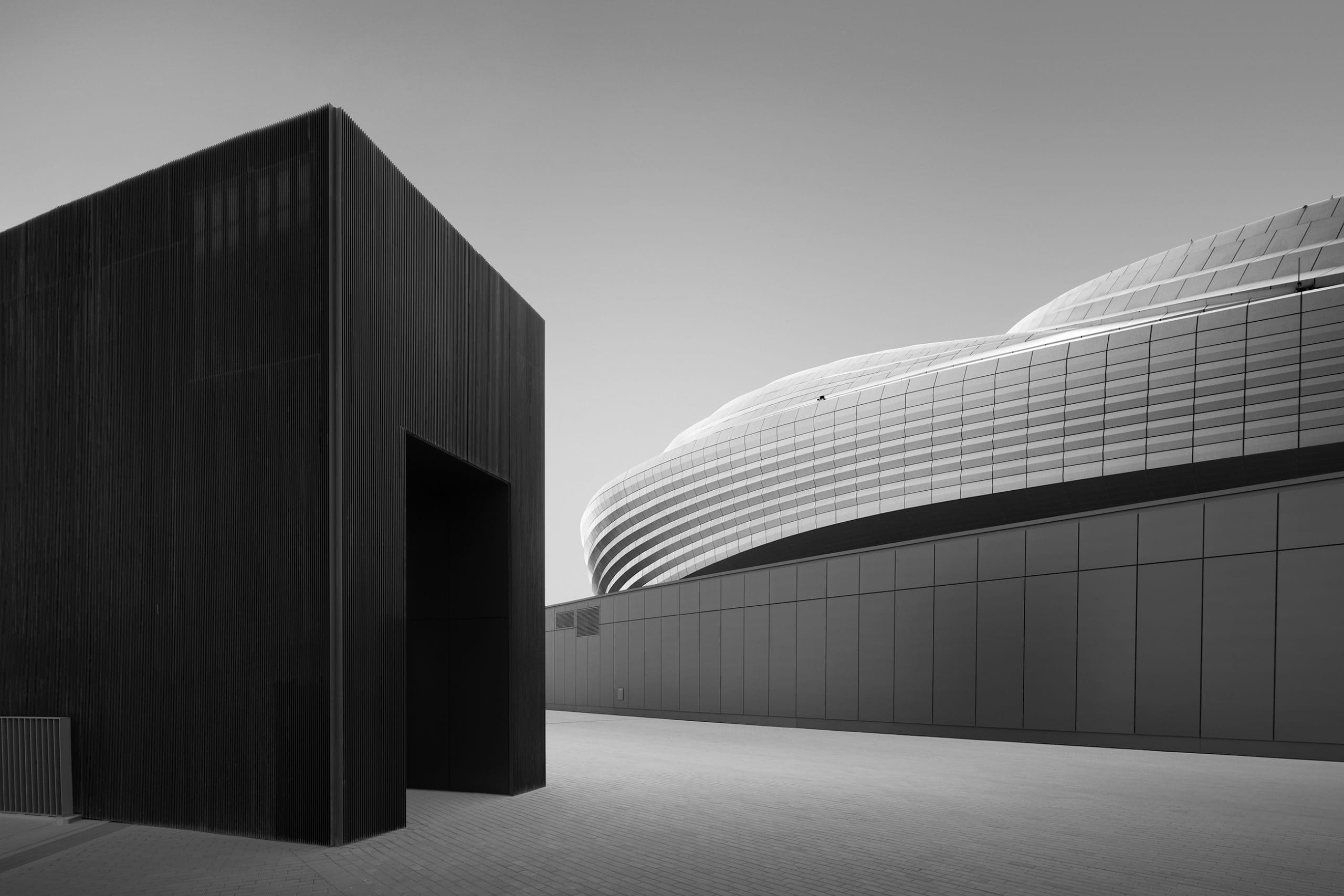
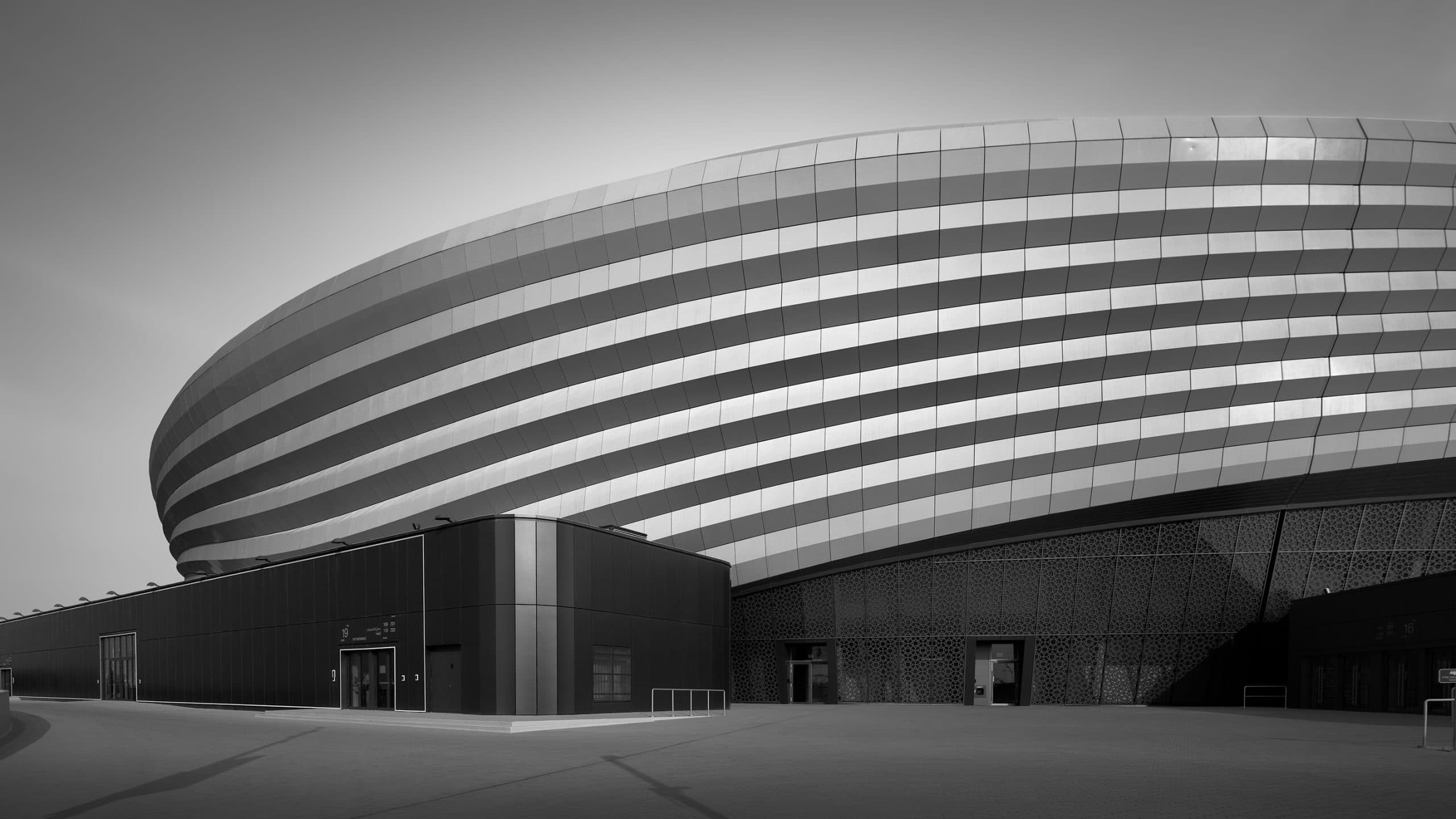
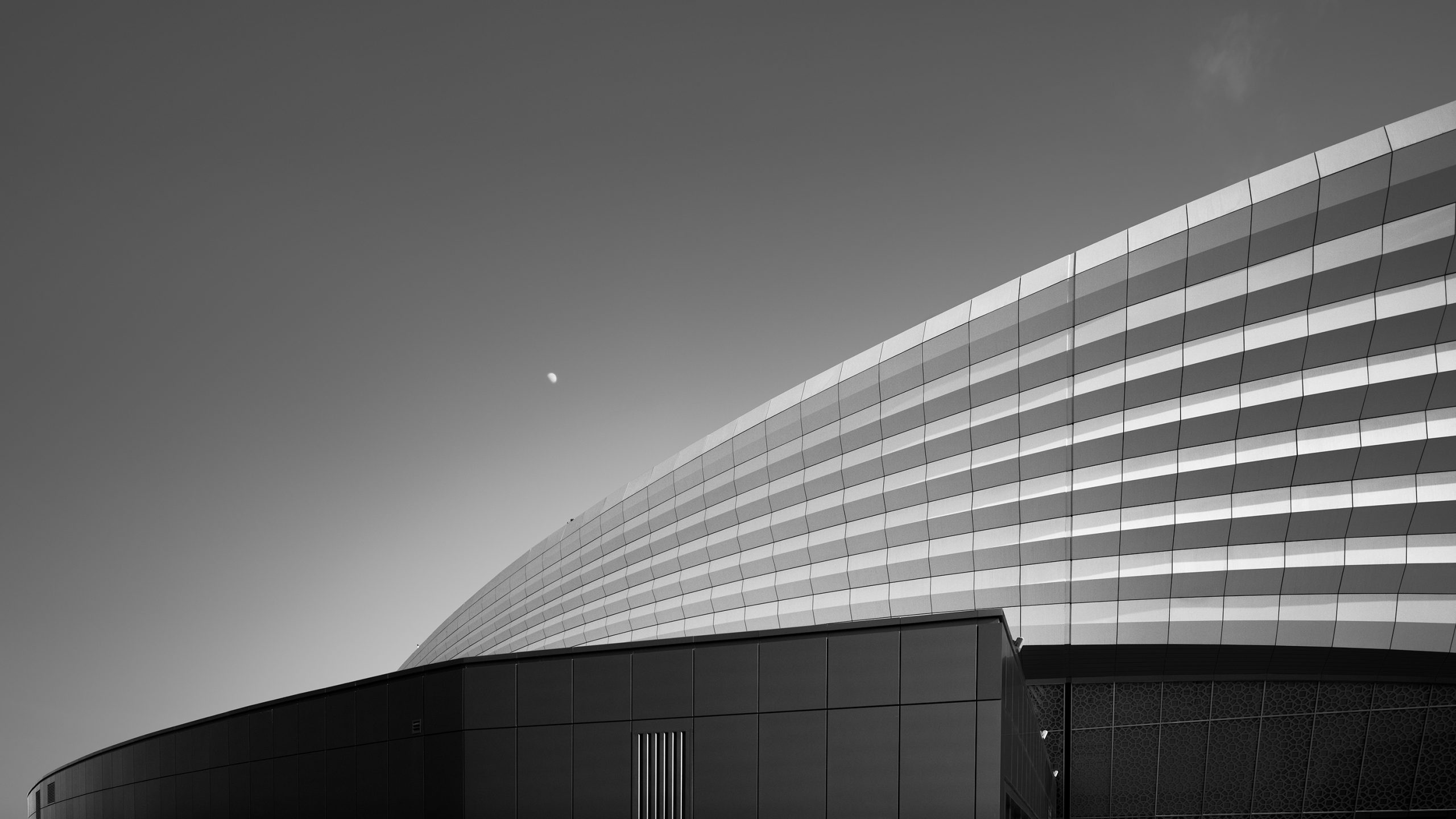
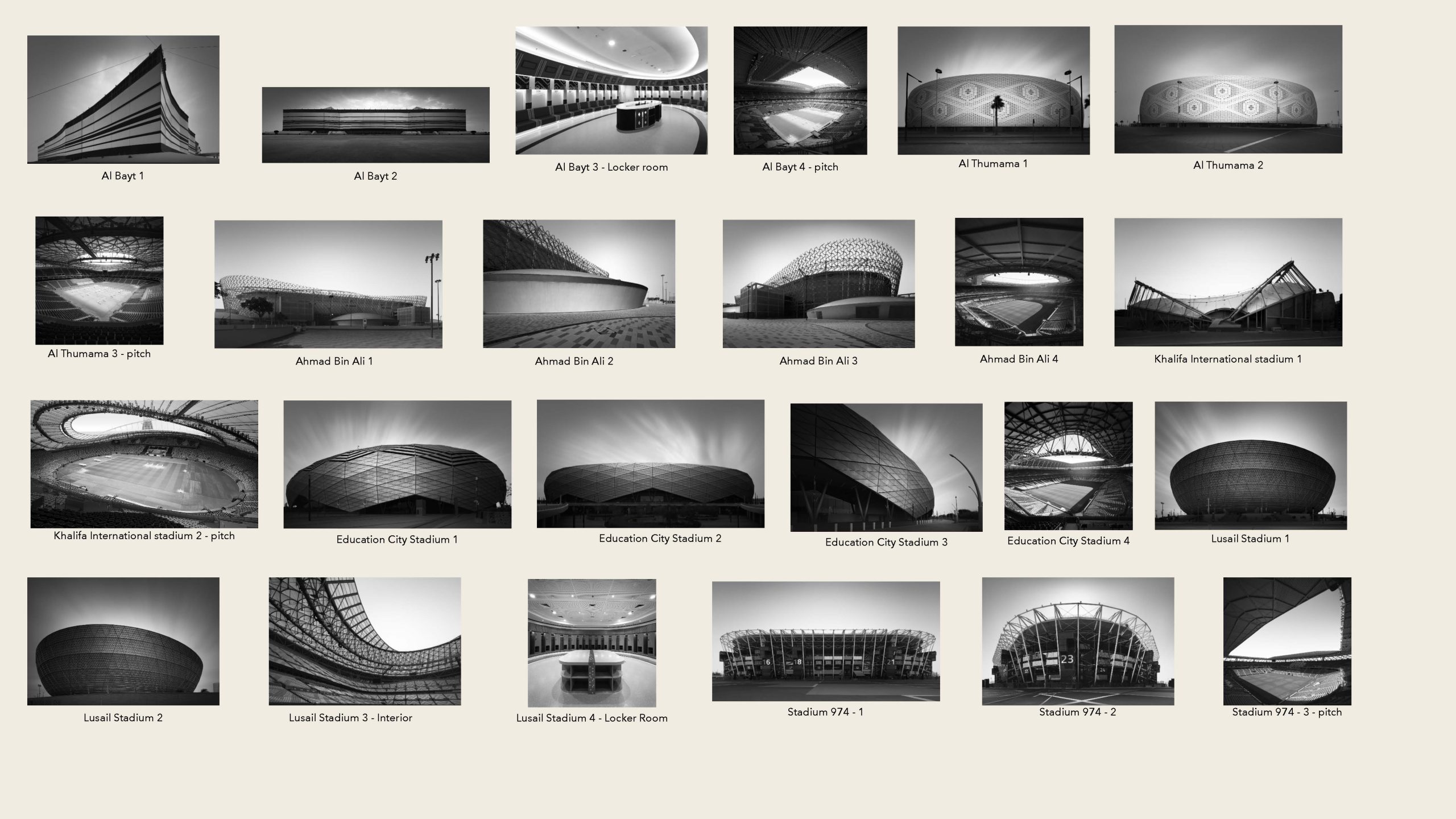
A subseries of images focusing on one specific stadium in Qatar, as part of an overall series of all World Cup 2022 stadiums in Qatar
Theme
A series wouldn’t be a series if there were no recurring theme in the sequence of individual images. Themes can be anything. It can be a similar object or figure, it can be a certain subject matter or message, or it can be a mood or visual style. Whatever the theme is, it needs to be clear and consistent what it is that you want to communicate. Something abstract, something very concrete, like a building, a personal experience, or an environmental message, for example.
Content
Content is more than just depicting photos from a specific genre. You can create a few dozen photos of a landscape, but that doesn’t make it a series. Because, after all, the genre of landscapes is broad.
To create a series of landscapes, you need to be more specific. Forget about broad genres, think in terms of a unique and particular object, scene, or place, in the landscape genre.
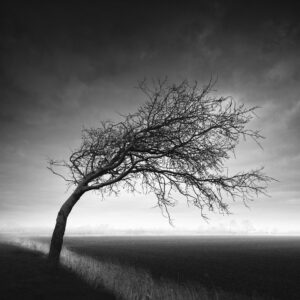
You can specify a landscape by focusing on a specific tree or forest, for example. Or the rock formations in Yosemite Park, as another example. The more specific, the easier it is to connect them in a unifying theme for a series. There must be a natural element that ties them together, like geographic proximity, for example.
Or if there’s no natural element to tie them together, then perhaps the nature of an object or scene can be a common denominator.
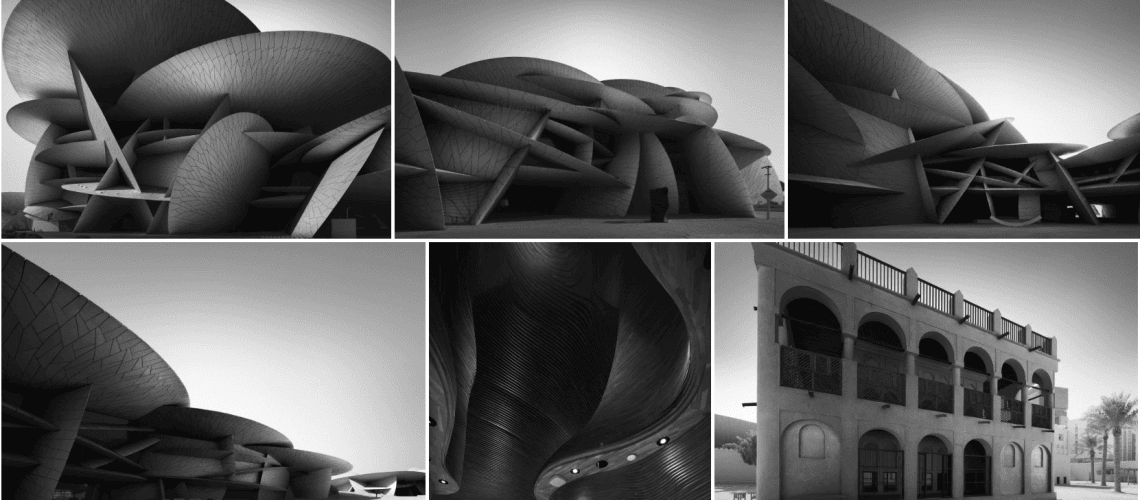
Let’s take architectural photography as an example. A series of buildings designed by the same architect spread out over different continents that display the signature design language of an architect will connect the images, despite the absence of geographic proximity. The same design language will then be the element that makes it specific. In that case, ensure that all the buildings indeed speak the same design language.
Or you could create a series of just one building photographed from different angles that gives a good impression of a building as a whole. Or a specific architectural detail that can be found in various buildings spread out over diverse locations. Specificity is therefore important, but specificity alone still doesn’t make a good series. It is just one important aspect that makes a good series.
Format
With format, I’m referring here to the concrete way the image is presented. That can be on a physical print and/or in a digital format. It is always recommended to create the series with the intention of having both a physical and digital format. What is important, but again, it is not set in stone, is to consider the orientation of the images.
A series of 10 images that are all horizontally orientated except for one that is vertically orientated is usually not a good series. The same series of 10, now with 6 horizontally orientated images and 4 vertically orientated images, for example, is better. It is all about balance and coherence. The more unity in format and size, the better.
Medium
This is already partly covered under Format, but the medium plays an important role when the series is presented as a set of physical prints. And keep in mind, when you create a series that draws attention, then you should be prepared that you will be asked to present them as physical prints in an exhibition. And even if you are not asked to present them in an exhibition, it is my personal opinion that an artist doesn’t create digital images only, but always creates for the physical and tangible print.
The physical print should be printed on similar paper with similar techniques, with comparable quality. Don’t use a variety of paper types that are very different in nature and texture. Go with all glossy or with all matte. Go with all textured papers or with all smooth papers. Use all bright white papers or off-white papers. Don’t mix them up. As for how they are printed technically, print the prints on the same printer with the same printing technology. And if you have it printed by someone else, do it at the same printing lab, one that you can trust to do a good job.
If you do outsource the printing, then preferably find a local printing lab so you can witness in person if the printing goes well. Or you can exchange corrections fast and easily. If you’re in the United States, then I can recommend Jeff Gaydash’s printing studio. Whenever I needed prints that I didn’t need on very short notice, then he would be my go-to point as he works with you, not just for you.
Number of Images
How many images make a series? There is no hard rule for this. However, I would say that the minimum number of a series is 3, and there’s no maximum number. But I would prefer to have at least 5 for a series. It depends a bit.
When you’re creating a series of one simple building, then 5 images is a good number to strive for. When creating an entire architectural series of buildings by the same architect spread out across different continents, then 15 is a feasible number that will add more substance to your series.
The more the better. I have created a series of 5 for architecture, but also created a large series of 30+ architectural images. And within that overall series of 30+ images you could have subseries of around 5 images, focusing on one of the buildings so you could present them as a stand-alone series as well.
Visual Uniformity, Consistency, and Uniqueness
This is perhaps one of the most important elements. You can miss all of the above mentioned key elements and still make a great series if the series has an unmistakable uniformity and consistency that is complemented by an eye-catching aesthetics that is unique. This is, of course, not easy to accomplish.
Visual uniformity and consistency to create a series that doesn’t have visual contradictions are something we should always strive for. It should be the main priority when creating a series. Without visual uniformity and consistency, there is hardly a series, no matter how good your content is.
It is hard to give rules on how to create visual uniformity and consistency as it depends on the series and on the first visual and often superficial, impressions. This is an explanation that is better served in a portfolio review for example, rather than just in writing in this blog. Keep this in mind when reading the following suggestions.
First, let’s address light, shadows, and the difference between them, contrast, as that is what photography is in essence, and that is the first thing that will be noticed. Ensure the brightest lights and highest contrasts are always around the main subject or area in an image. That is a rule that also applies to individual images. When working in a series, you have to ensure that the same amount of bright light and differences between light and shadow are present across all images. The amount of light and contrast is the first thing someone will notice when seeing a series for the first time. It will immediately be visible, even to a non-expert viewer, if the contrasts and the amount of brightest light and darkest shadows are not similar. This balance between the amount of lighter and darker areas, and the brightest light and darkest shadow, determines the visual style of an image and a series. It can create or break the mood. If you work with color, then pay attention to the use of complementary colors vs monochromatic colors or neutral colors vs vivid colors.
When it comes to technique then use the same technique. If you use long exposure techniques, then try to keep the same exposure times for the same visual style. If you use intentional movement, then do it across all images. I personally find sharpness only important in specific images that need sharpness, but I use the same sharpness across all images. I have seen softer images and series that would not be as good if they were sharper. Softness can create a certain mood that is decisive. Sharpness is too often overrated.
Backgrounds and skies: most images will have skies or another type of backdrop. Make them similar. A series with different-looking skies can disrupt the consistency. Either all images have clouds or none have. Not a hard rule, of course, but it helps create uniformity if you are consistent in that. Very important: use the same tonality and contrasts in the skies! A series in which one image has a very high contrast sky while other images have lower contrast and less prominent skies will immediately stand out. This applies to other backdrops as well: pay attention to blurry vs sharper backgrounds, lower contrast or higher contrast backgrounds, lighter or darker backgrounds.
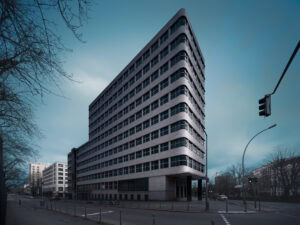
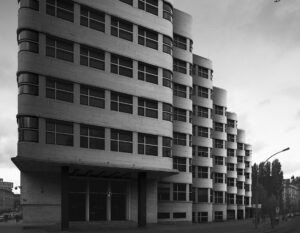
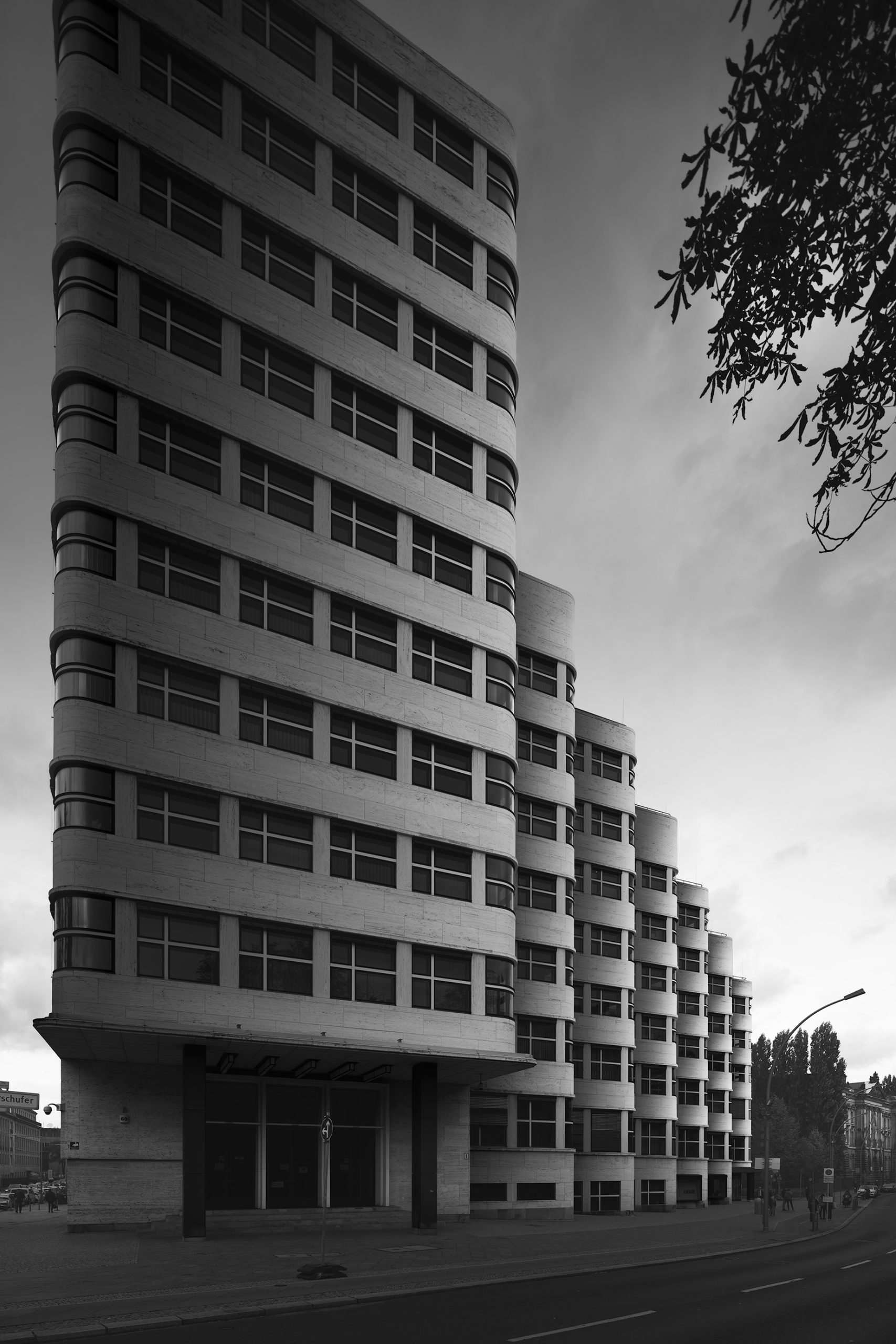
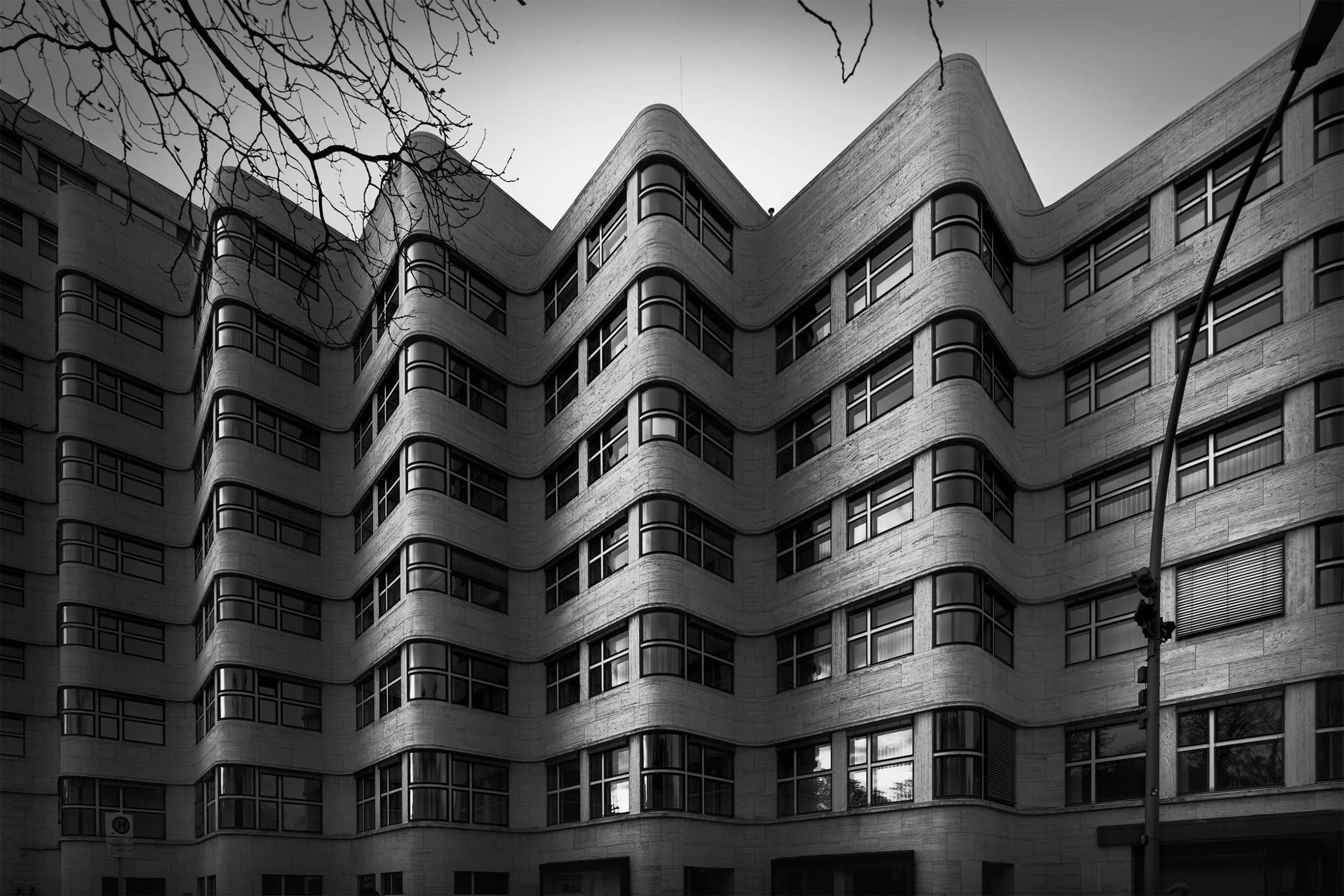
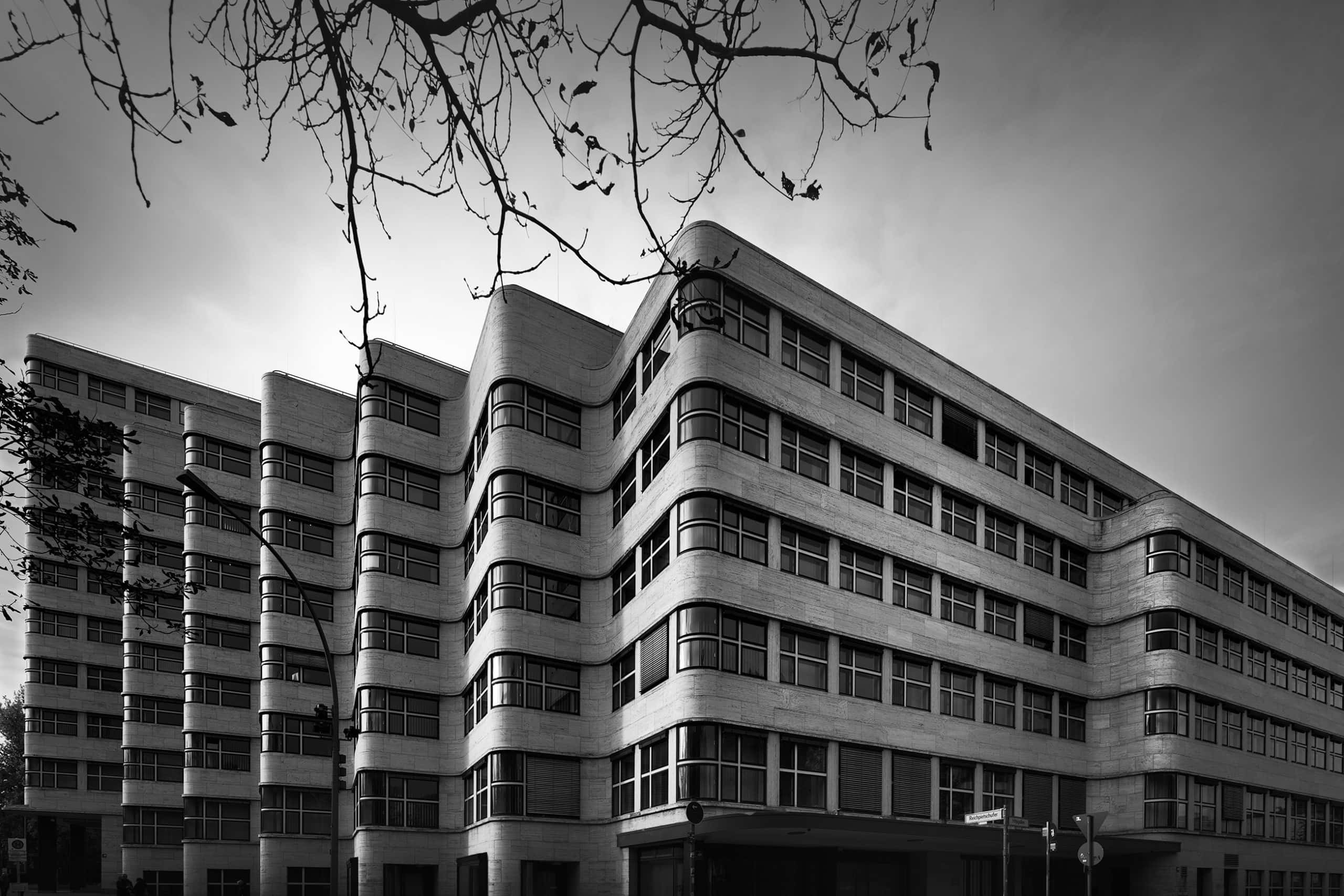
A small series of 3 images of the Shell Haus in Berlin. Notice the similarity in tonality in contrasts, shadow and highlight distribution in the three images to create uniformity. You will also see that one image out of three is vertically orientated. The series is not finished yet and will get one more vertically orientated image.
Conclusion
The key elements listed here are not exhaustive but will apply to most images and series. And more importantly, it will only make sense and become practical and concrete if you let someone you trust and respect review your work visually, in person.
On that note: I will go into more detail on creating series and how to ‘find’ or conceive a series that will suit you as an artist, and then bring it to execution in practice my upcoming 6-day multi-city architecture ‘Deep-Dive’ workshop in Milan-Rome in October. where the theme is ‘finding one’s unique voice’. And that can become concretely and clearly visualized in, of course, a series of images. At the moment of writing this, there are still places available.
Copyright disclaimer
Finally, it needs to be clear that all my articles, and blogposts cannot be distributed or partly copied and then integrated in an article or post to conceal that it has been copied, without my prior consent. If you like what I wrote, and want to use my articles or parts of it, then just be fair and credit the original author.